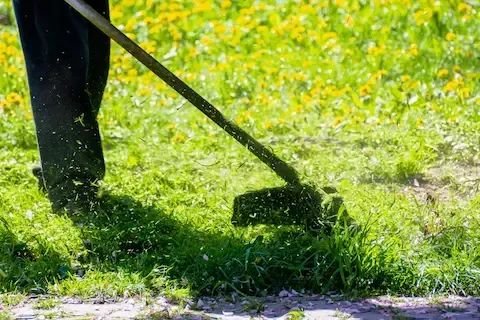
Lawn Trimming Around Fences in Fort Wayne, IN: Tips
Keeping grass tidy along fences and garden beds is one of the most detail-intensive parts of maintaining a Fort Wayne lawn. Mowers can't reach into corners, along chain-link posts, or up against wooden boards without risking damage to both the equipment and the fence itself. That gap between where the mower stops and where clean turf should begin is where trimming technique really matters. Whether you're managing a privacy fence along the back of your lot near Waynedale or a picket fence bordering a front flower bed in Aboite Township, getting this right separates a maintained yard from a professional-looking one.
Why Fence Lines Are Difficult to Trim Properly
Fences create microzones that challenge standard lawn care routines. Grass grows faster in shaded fence lines during spring months because of moisture retention in the soil. In summer, the same areas can dry out faster, making the grass brittle and prone to scalping if your trimmer angle is off. In Fort Wayne's climate, where temperatures swing from humid summers to hard winters, grass near fence posts also tends to develop thick clumping growth that a trimmer line can tear rather than cut cleanly.
Chain-link fences are particularly tricky because grass and weeds weave through the mesh from the base. Wooden privacy fences present a different challenge: direct contact from a string trimmer can strip stain, damage painted surfaces, or splinter lower boards over time. Vinyl fences are less forgiving of repeated impact than wood, and aluminum ornamental fencing bends easily under pressure. Knowing the material you're working against determines the technique you use.
Choosing the Right Equipment for the Job
A standard gas or battery-powered string trimmer handles most fence line work, but head angle and line gauge matter. For tight residential fence lines, a curved-shaft trimmer with a smaller head gives you better visibility and control in corners. A straight-shaft trimmer offers more reach under horizontal fence rails without requiring you to reposition your body repeatedly.
Line gauge is often overlooked. A heavier gauge — 0.095 inches or above — cuts through thick clumping grass without breaking mid-pass. Lighter gauge lines are fine for regular maintenance trims but will snap frequently in overgrown conditions. If you haven't trimmed a particular fence line in several weeks, upgrade your line weight before you start.
For garden bed edging adjacent to fences, a dedicated flat-blade edger gives you a cleaner line than a rotary trimmer. The vertical blade cuts a defined edge rather than fraying the turf horizontally. Many professional crews working Allen County residential properties use a stick edger first along bed borders, then follow up with a trimmer for the fence line itself.
Step-by-Step Technique for Trimming Along Fences
Work the trimmer with the line rotating toward the fence, not away from it. This pulls the cut material toward the fence base rather than flinging debris back across your freshly mowed lawn. Keep the head slightly tilted — around 10 to 15 degrees — so only the tip of the line does the cutting. Running the full spinning head flush against a surface causes scalping and uneven results.
Move at a consistent pace. Too fast and you leave uncut blades. Too slow and you risk scalping or spinning clippings into the fence surface. For chain-link, use a back-and-forth motion along the base rather than a single continuous pass. This allows the line to reach through the mesh gaps and cut the grass growing into the fence without tangling the line itself.
At fence posts, pause and approach each post from two angles — one pass from each side — to clear the grass that wraps behind the base. This is the most commonly missed spot during trimming and the one that makes a fence line look unkempt even when everything else is clean. It takes about four extra seconds per post, but it makes a visible difference across the full fence run.
For Edging And Trimming along beds that run parallel to a fence, establish your bed edge first with the flat edger, then clean the fence base second. Working in that sequence prevents you from disturbing the fresh edge line when you reposition for the fence pass.
Avoiding Common Damage to Fences and Plants
String trimmer line rotates at speeds that can damage materials quickly. Against wooden fences, reduce your RPM if your equipment allows it, or use a trimmer guard extension that limits how close the spinning line can get to the surface. Many professional operators also develop a slight hover technique — keeping the trimmer head a half-inch above the soil surface — so the line cuts the grass at mid-stem rather than at ground level near the fence board.
Never use a metal blade trimmer attachment near fences unless you have significant experience with the equipment. Metal blades are efficient on heavy brush but can cause serious damage to fence posts and boards in an instant. For the dense grass that sometimes grows near older wooden fences in established Fort Wayne neighborhoods like Lakewood Park or the southeast quadrant, multiple passes with a standard line trimmer are safer than a single aggressive pass with a blade.
When trimming near ornamental plantings along a fence, use your hand or a piece of cardboard to shield lower foliage from the spinning line. Ground-level perennials and low-growing shrubs are easy to damage, and replacing established plantings is both expensive and frustrating. Taking thirty seconds to protect the plant saves a season of regrowth.
Garden Bed Edging Technique in Indiana Clay Soil
Fort Wayne's clay-heavy soil compacts and heaves through freeze-thaw cycles, which means bed edges that were clean in October may be blurred by spring thaw. Establishing a crisp edge early in the season sets the tone for the rest of the year. Use a half-moon edger or flat spade to recut the physical border if it has deteriorated, then maintain it with a rotary or stick edger throughout the season.
For beds along fences, cut the edge at a 90-degree vertical angle into the soil, then remove the cut strip. This creates a distinct channel between turf and bed that's easy to maintain and visually clean. Deeper channels — around two to three inches — reduce the frequency of reedging because they interrupt lateral grass spread more effectively than shallow cuts.
Understanding how to keeping lawn edges sharp between service visits can extend the life of a professionally established bed edge significantly. Regular light maintenance after the initial deep cut is almost always easier than recutting a grown-over edge from scratch.
When to Call a Professional Crew
Some fence configurations are simply difficult to maintain efficiently without professional equipment and trained technique. Long runs of chain-link with heavy grass intrusion, privacy fencing with decorative bottom rails, or bed borders with complex curves near fencing all benefit from professional attention at least at the start of the season. In Allen County, where suburban lot sizes vary considerably from compact city parcels to larger township properties, the time investment for detail trimming adds up quickly.
If you're finding that your fence lines look ragged within a week of trimming, or that you're frequently breaking line or causing surface damage to the fence, adjusting your technique or equipment is the first step. If the problem persists, having a professional crew establish the correct baseline — proper edge depth, cleared fence base, protected plantings — makes ongoing self-maintenance much more manageable.