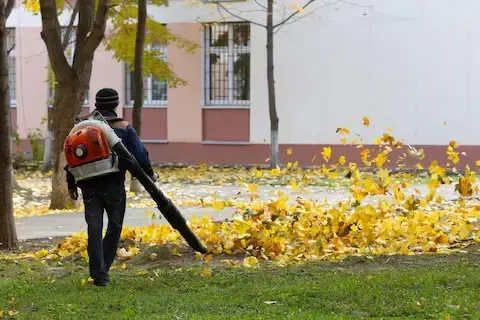
Fall Cleanup Steps Before Fort Wayne IN Snow Season Hits
Fort Wayne winters don't wait for a convenient moment. One week you're raking leaves under a gray November sky, and the next a hard freeze locks the ground and the first real snow is already in the forecast. If you haven't closed out your yard properly before that transition happens, you'll pay for it in spring — dead turf patches, cracked irrigation lines, clogged gutters that turn into ice dams, and equipment that won't start when you need it. A structured fall cleanup routine before the snow season hits isn't optional maintenance. It's the work that determines how well your property comes out of winter.
Why Fall Cleanup Timing Matters in Fort Wayne
Fort Wayne's climate sits in a zone where late fall is genuinely unpredictable. Temperatures along the St. Joseph and Maumee River corridors can drop fast, and Allen County residents know from experience that a week of mild weather can give way to a hard frost with very little warning. That timing variability is exactly why you need a checklist you can work through systematically rather than reacting to the first snow forecast.
The general target for completing outdoor fall cleanup in the Fort Wayne area is before Thanksgiving, though some years early November is safer. Pay attention to extended forecasts from the National Weather Service's Northern Indiana office. When overnight lows are consistently hitting the mid-20s, the window is closing.
Final Mowing Height and Lawn Prep
One of the most common fall mistakes is leaving grass too tall going into winter. Tall grass mats down under snow, traps moisture, and creates conditions for snow mold — a fungal disease that shows up in spring as circular dead patches across Fort Wayne lawns. The target final mowing height for cool-season grasses common in Indiana is between 2 and 2.5 inches.
Work your final mow down gradually over the last two or three cuts. Don't scalp the lawn in a single pass. If you're still seeing active grass growth, continue mowing until growth genuinely stops — not just until you're tired of mowing. After the final cut, clear any remaining leaf debris from the surface. Leaves left matted on turf block light and air and accelerate fungal problems through the winter months.
If you haven't aerated and overseeded yet this fall, do it before any hard freezes. Fort Wayne's clay-heavy soils compact easily, and aeration before winter helps water and oxygen reach grass roots during freeze-thaw cycles.
Hose and Irrigation Drainage Steps
Water left in outdoor hoses, spigots, and irrigation lines freezes and expands. That expansion cracks pipes and fittings in ways you won't discover until you turn the water back on in spring — usually at the worst possible moment. This step is straightforward but must be done before the first hard freeze, typically when overnight temps are forecasted to stay below 32°F for more than a day or two.
- Disconnect all garden hoses from exterior spigots and drain them completely before storing
- Locate and shut off the interior valve feeding your outdoor spigots, then open the exterior valve to let any remaining water drain out
- If your home has frost-free spigots, confirm the interior valve is functioning correctly — frost-free doesn't mean freeze-proof if a hose is still attached
- If you have an in-ground irrigation system, schedule a blowout with compressed air before ground temperatures drop below freezing
In areas of Fort Wayne with older housing stock — particularly neighborhoods on the northeast and southeast sides — aging plumbing infrastructure makes this step even more critical. A cracked outdoor pipe in February is a difficult repair under any conditions.
Gutter Clearing and Roof Edge Prep
Fort Wayne has significant tree canopy in established neighborhoods like Waynedale, Georgetown, and along Covington Road. That canopy is beautiful, but it means gutters accumulate heavy debris loads through October and November. Gutters clogged with wet leaves going into winter create two serious problems: ice dams along roof edges and standing water that freezes and damages gutters, fascia boards, and soffits.
Clean gutters at least once after peak leaf fall — often in early to mid-November in Allen County. If your property has heavy tree coverage, a second cleaning after the last leaves drop is worth the effort. After clearing debris, flush gutters with water to confirm downspouts are draining freely. Check that downspout extensions are directing water away from your foundation, not pooling near the house where it can freeze against the foundation wall.
Equipment Turnover for Winter Storage
Lawn equipment left with stale fuel through a Fort Wayne winter causes more headaches than any other single maintenance failure. Gasoline degrades over 30 days and leaves behind gummy deposits in carburetors and fuel lines. Before you put your mower, trimmer, and other gas-powered equipment away for the season, run the fuel system dry or treat it with a fuel stabilizer rated for long-term storage.
- Add fuel stabilizer to the tank, run the engine for a few minutes to circulate treated fuel through the system, then store
- Alternatively, run the engine until it dies from fuel starvation — this works but isn't ideal for all engine types
- Change the oil before storage, not after winter — old oil contains combustion acids that corrode engine components during long storage periods
- Remove and inspect spark plugs; replace if showing heavy fouling or wear
- Clean the underside of the mower deck to remove caked grass and debris before it hardens further
- Sharpen or replace mower blades before storing so they're ready in spring
If you're storing equipment in an unheated garage or shed — common in Fort Wayne's older residential neighborhoods — battery-powered equipment batteries should come inside. Lithium batteries degrade faster when stored in freezing temperatures.
Final Walkthrough Before Snow Arrives
Once the main tasks are complete, do a physical walkthrough of your property before the first real snowfall. This is the step most people skip and most often regret. Look for:
- Tools, hoses, or furniture left in areas that will be in snow removal paths
- Low branches that could snap under ice or snow load and fall on structures or vehicles
- Markers needed to define driveway edges, curbs, or buried landscape features — especially important if you're using a plow service this winter
- Any concrete cracks or settling around sidewalks or the driveway apron that water can enter and freeze, accelerating damage
If you use a professional snow removal service in Fort Wayne, coordinate with them before the season starts. Provide clear information about your property layout, any obstacles under potential snow cover, and your service expectations. Early coordination prevents misunderstandings when the first significant storm hits and everyone is busy simultaneously.
For a detailed pre-season planning approach, the fall cleanup planning workbook walks through a property-by-property checklist format that keeps the process organized and nothing slips through before winter. And if the full scope of fall prep is more than you want to take on yourself this year, professional Fall Cleanup services are available across Allen County to handle the heavy lifting before snow season arrives.