Fall Yard Cleanup in Fort Wayne, IN: Timing and Tasks
Fall moves fast in Fort Wayne. One week the maples along Spy Run Creek are turning gold, and the next a hard freeze has locked the ground and left a mat of wet leaves suffocating your lawn. The window between peak color and the first killing frost is narrow enough that timing your yard cleanup well makes a real difference in how your lawn comes through winter and rebounds in spring. Getting the sequence right means understanding what Allen County's climate actually demands, not following generic national advice written for milder zones.
Understanding Fort Wayne's Fall Climate Window
Fort Wayne sits in USDA Hardiness Zone 6a, which means average minimum winter temperatures can drop to -10°F. The first frost typically arrives around mid-October, and the first hard freeze — temperatures at or below 28°F for several consecutive hours — usually follows within two to three weeks. By mid-November, soil temperatures often drop below 50°F, which is the threshold at which grass roots essentially stop absorbing nutrients.
That late-September through early-November window is your prime time for fall yard work. Before the first frost, your lawn is still actively growing and recovering. After a hard freeze, many of the most effective treatments lose their impact. Allen County residents who wait too long consistently miss the best conditions for overseeding, fertilizing, and final mowing adjustments.
The other factor unique to this region is the heavy leaf load. Fort Wayne's residential neighborhoods — from the tree-lined streets of West Central to the mature canopy neighborhoods near Waynedale — produce enormous volumes of fallen leaves. Oak, maple, sycamore, and sweet gum trees drop leaves in different sequences, meaning cleanup isn't a one-time event but a series of passes through October and into November.
Leaf Removal: Why Timing and Frequency Matter
Leaves left on your lawn for more than a week in wet fall weather begin to mat together. A matted leaf layer blocks sunlight, traps moisture, and creates ideal conditions for gray snow mold and other fungal issues that will surface in early spring. Fort Wayne's typical fall weather pattern — alternating rain and cooler temperatures — accelerates this matting process faster than many homeowners expect.
The practical approach is to run a mowing pass over light leaf cover to mulch the debris back into the turf when coverage is under 20 to 25 percent of the lawn surface. Mulched leaves in small quantities actually return organic matter and nutrients to the soil. Once coverage passes that threshold, however, removal becomes necessary. Letting leaves pile up until they're all down sounds efficient, but the lawn underneath can take serious damage in a wet October.
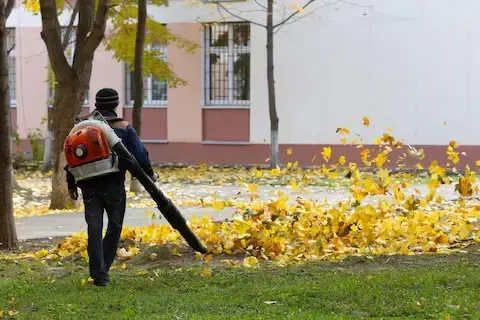
Plan on at least two to three dedicated leaf removal passes for most Fort Wayne properties. Early October handles the first major wave from maples and ornamental trees. Late October addresses the bulk of the drop. A final cleanup in early to mid-November clears stragglers from oaks and late-dropping species before the ground freezes. If you're working with a service, coordinating these passes in advance means you won't be waiting weeks for a crew slot during peak demand in late October.
For help planning these passes efficiently, Fall Cleanup services can be scheduled in advance to align with your property's specific tree types and typical drop timing.
Lawn Prep Tasks That Must Happen Before the First Hard Freeze
Several lawn treatments only work when soil temperatures are in the right range. Missing that window means waiting an entire year to try again, which can have compounding effects on lawn health.
Final fertilization: A late-fall fertilizer application — often called a winterizer — should go down when the lawn has stopped active top growth but the soil is still unfrozen. In Fort Wayne, that usually means late October through the first week of November. This feeds root development and builds carbohydrate reserves that help grass survive winter stress and green up faster in spring. Using a fertilizer with a higher potassium ratio supports root hardiness specifically.
Overseeding thin areas: If you're planning to overseed bare or thin patches, that work needs to happen in early fall — ideally before mid-October — so new seedlings have time to establish before the ground freezes. Overseeding after the first hard freeze is largely wasted seed. Pair overseeding with light aeration if the soil is compacted, since seed-to-soil contact is the most important factor in germination.
Final mowing height adjustment: Lower your mowing height gradually during October, finishing the season at around 2 to 2.5 inches. Grass left too tall going into winter creates habitat for voles and increases snow mold risk. Grass cut too short loses the insulating crown cover it needs. The gradual reduction avoids shocking the lawn while still hitting the right final height.
Aeration and dethatching: Fall is the ideal time for core aeration in Allen County because cool-season grasses like Kentucky bluegrass and tall fescue — the most common turf types in Fort Wayne yards — are actively growing in fall and recover from aeration quickly. Dethatching removes the layer of dead organic material that accumulates between the soil surface and live grass blades, improving water and nutrient penetration. Schedule these tasks in September or early October to give the lawn maximum recovery time.
Landscape Bed and Perennial Cleanup
Landscape beds collect leaves, dead annuals, and spent perennial foliage throughout fall. The timing question here is more nuanced than with lawn work. Some perennial stems and seed heads provide food and shelter for native insects and birds, so cutting everything back in October is not necessarily the right approach. A more targeted strategy works better.
Remove dead annuals and any disease-prone foliage — like the canes of roses that showed black spot or mildew — before the first freeze. This reduces overwintering pathogen populations. Leave ornamental grasses and perennials with structural interest standing through winter and cut them back in early spring before new growth emerges. Apply a two to three inch layer of mulch to exposed beds after the ground has cooled but before it freezes, typically late October to early November in the Fort Wayne area. This regulates soil temperature fluctuations and reduces frost heaving of shallow-rooted perennials.
Edging and defining bed borders before leaf cleanup makes the whole process faster and the finished result cleaner. Once beds are defined, leaf blowing is more efficient and less likely to displace mulch into the lawn.
Winterization Tasks Often Overlooked
Yard cleanup includes more than just plant material. Several mechanical and structural tasks also belong on the fall checklist before temperatures drop permanently.
Irrigation systems: If your property has an in-ground irrigation system, it must be blown out before the first hard freeze. Water left in lateral lines and heads will expand when it freezes, cracking fittings and heads. In Fort Wayne, scheduling a blowout in October is the safe window. This is one task with a hard deadline — once temperatures drop into the 20s overnight consistently, you've run out of time.
Outdoor faucet protection: Disconnect and drain garden hoses, and close the shutoff valves to exterior hose bibs. Modern frost-free sillcocks handle brief freezes, but standard faucets and older plumbing require this attention every fall.
Gutters and downspouts: Fort Wayne's leaf volume makes gutter cleaning a late-fall necessity. Clean gutters after the majority of leaves have fallen — typically early November — rather than in October when more leaves are still coming. Clogged gutters cause ice dam formation in winter and direct water toward the foundation.
Tree and shrub inspection: Fall is a good time to walk your property and note any dead branches, storm damage, or structural concerns that could become hazards under winter ice and snow loads. Northeast Indiana gets measurable ice storm events roughly every few years, and Allen County's mature tree canopy means the risk is real. Have removal or pruning work done before branches become encased in ice.
Common Timing Mistakes Fort Wayne Homeowners Make
The most frequent error is waiting until all the leaves are down before beginning cleanup. By that point, the lawn underneath has often been smothered for three to four weeks, fungal pressure has built, and soil temperatures have dropped too low for effective fertilization or overseeding. Starting too late also means competing with every other homeowner for crew availability in a compressed window.
A close second is treating fall cleanup as a single event. The property looks clean after an October service, and the task gets mentally checked off — but the oaks and sweet gums in the backyard still have half their leaves. A single-pass cleanup in early October misses most of the actual leaf volume and leaves the lawn exposed through November.
Skipping the final low-height mowing is another common oversight. Grass going into winter at four inches creates significantly more vole runway and snow mold risk than grass brought down to 2.5 inches before freeze-up.
Coordinating Cleanup With Snow Removal Planning
In Fort Wayne, fall yard cleanup and snow removal planning overlap. The same properties that need thorough fall service typically need reliable snow management starting in November. If you're working with a lawn service for fall cleanup, that's a natural time to confirm snow removal coverage before the first snowfall. Having the same crew familiar with your property makes both services more efficient.
Allen County averages around 32 inches of snow annually, with significant year-to-year variation. Early-season snowfalls in November, before lawns are properly cleaned up, can complicate both cleanup and plowing. Getting ahead of leaf removal by early November gives you a clean slate before snow season begins.
For context on managing debris through the full transition from summer to fall, the resource on summer and fall debris clearing for Fort Wayne yards covers how to sequence the work from August through October.
Making the Most of a Narrow Season
Fort Wayne's fall cleanup season is genuinely short. The conditions that allow effective lawn treatment, overseeding, and fertilization exist for about six weeks. Leaf removal demands repeat attention across eight to ten weeks. Winterization deadlines are hard stops tied to overnight temperatures. Homeowners who work with a realistic timeline — starting in late September, planning for multiple passes, and finishing core treatments before the first hard freeze — set their lawns up for a noticeably better spring. Waiting for the right moment when everything will be done in one trip usually means missing the best opportunities entirely.