Edging Clay Soil Borders Around Fort Wayne IN Yards
Fort Wayne yards sit on some of the heaviest clay soil in Indiana, and that changes everything about how you approach edging. What works perfectly in sandier ground will frustrate you here. Borders crack in summer, slump after a hard rain, and heave through winter freeze-thaw cycles until the clean line you cut in May is barely recognizable by October. Understanding how clay behaves in this specific region helps you make smarter choices about tools, timing, and maintenance intervals so your borders actually stay sharp through the season.
Why Clay Soil Makes Edging Harder Than It Looks
Clay soil is dense, poorly draining, and highly reactive to moisture. When it dries out during a Fort Wayne summer, it contracts and forms visible cracks along your bed edges. When it absorbs rain, it expands and softens, and the weight of displaced soil causes your border walls to slump or smear. Unlike sandy or loam-based soil that holds a cut edge relatively well, clay is constantly moving in small ways that gradually erode the precision of any line you create.
The shrink-swell cycle is particularly pronounced in northeast Indiana. Fort Wayne typically sees sharp temperature and moisture swings from spring through fall, and the freeze-thaw cycles from November through March are relentless. Each freeze causes moisture in the clay to expand, pushing soil upward and outward. Each thaw lets it settle, but not always back to its original position. Over a full winter, that repetitive movement can push an edged border several inches out of position without any foot traffic or disturbance at all.
The Right Tools for Heavy Soil Borders
Hand-powered half-moon edgers can work in light soil, but in Fort Wayne clay they require significant physical effort and rarely produce a consistent depth. A flat spade is better for renovation work, where you are reestablishing a border that has grown over, because you can drive it with your foot and slice through compacted clay with a rocking motion. For regular maintenance cuts on an established border, a rotary or stick edger with a rigid steel blade gives you speed and consistency without the physical toll.
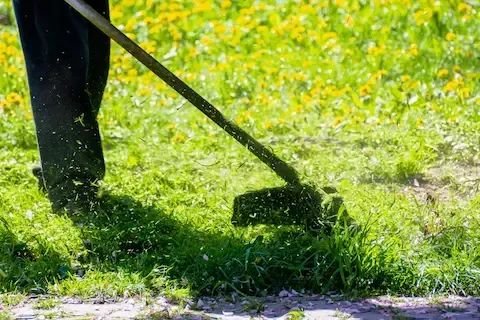
Power edgers perform well on clay as long as the soil is not waterlogged. If you try to edge Fort Wayne clay within 24 hours of a significant rainfall, the blade drags soft material rather than cutting it, and you end up with a smeared edge rather than a clean wall. Wait until the surface has dried enough that it holds a footprint without squishing, usually 36 to 48 hours after heavy rain, and the blade will cut cleanly even through dense material.
Blade depth matters more in clay than in other soil types. A shallow cut of one to two inches will wash away with the first hard rain because there is not enough wall height to hold the separation between lawn and bed. Aim for a cut of at least three inches, which gives you a defined vertical face that resists the soil movement and heavy rainfall that are both common in Allen County.
Timing Edges Around Fort Wayne's Weather Patterns
Spring is both the best and most difficult time to edge in Fort Wayne. The soil is moist enough from snowmelt and spring rain that the blade moves through clay without cracking the surface, which gives you a cleaner initial cut. The problem is that spring moisture also means the borders can slump quickly if you edge too aggressively or if rain follows immediately after. A good approach is to establish your initial spring edge at a moderate depth, let the soil settle for a week, and then recut to final depth once it has stabilized.
Summer edging in Fort Wayne clay requires watching the heat index as much as the calendar. During stretches of dry, hot weather, the surface layer of clay can become almost concrete-hard. Forcing a blade through it at that point risks damaging equipment and produces ragged, chipped edges rather than smooth walls. Early morning edging during dry spells, when overnight humidity has softened the top inch slightly, produces noticeably better results than midday work on the same soil.
Fall is an underrated time to sharpen your borders in Fort Wayne. Soil temperatures are still moderate, ground moisture is usually reliable from September rainfall, and the clay cuts cleanly. A well-defined edge going into winter also helps the borders hold their position through freeze-thaw, because a steep, clean wall resists lateral soil movement better than a sloped or partially eroded one.
Keeping Lines Sharp Between Service Visits
One of the most common mistakes Fort Wayne homeowners make is treating edging as a one-time seasonal task. Clay soil movement means borders need active maintenance, not just an annual reset. In practical terms, that means re-cutting or cleaning your edge every three to four weeks during the growing season. A quick maintenance pass with a stick edger takes only a few minutes once the initial depth is established and prevents the gradual creep that makes restoration so labor-intensive.
Removing the trimmings after edging is also more important with clay than with lighter soils. Displaced clay clumps are heavy and wet, and if you leave them sitting on the bed surface, they can reattach to the soil during the next rain and partially fill in the trench you just cut. A quick pass with a stiff broom or a blower along the border after edging keeps your cut line visible and prevents material from working back into the gap.
Mulch depth in adjoining beds affects border durability too. If your bed mulch is thin, water from rain or irrigation hits the soil directly near the edge, eroding the clay wall from the bed side. Maintaining three inches of mulch pulled back slightly from the actual edge protects the soil and slows erosion while still giving you a visible definition line between lawn and bed.
When to Call a Professional for Fort Wayne Clay Borders
Some clay border situations are genuinely beyond the reach of DIY maintenance. If your borders have heaved multiple inches over the winter, if tree root systems are actively disrupting the soil beneath your edges, or if you have low spots collecting water against the bed edge, those are structural problems that require more than a blade pass. Regrading, root management, and proper drainage corrections need to happen before edging will hold.
Professional services also make sense when the cumulative drift of clay movement has pushed your borders several inches out of their intended position. Restoring a border that has migrated significantly requires removing excess soil from the lawn side, reestablishing the correct edge line, and cutting to proper depth, which is a substantial job in dense Allen County clay. For ongoing maintenance afterward, professional edging visits scheduled at the right intervals for clay conditions will keep the work from compounding.
For details on professional edging options, see Edging And Trimming services available in the Fort Wayne area. You can also review the edging and trimming overview for a broader look at what the process involves and how frequency decisions are made for different yard types.
Clay soil is not an obstacle to clean, defined borders. It is simply a variable that requires you to work with the material rather than against it. Understanding the seasonal behavior of Fort Wayne's heavy soil, choosing the right tools, and maintaining consistent intervals gives you borders that look intentional and hold their line through everything northeast Indiana weather can produce.