Choosing De-Icers For Sub-Zero Fort Wayne IN Winters
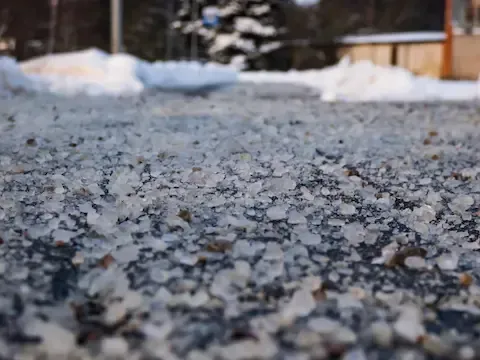
When Fort Wayne temperatures drop below 20°F, standard rock salt stops working. Calcium chloride remains effective down to -25°F, making it the most reliable choice for sub-zero conditions in northeast Indiana. Magnesium chloride works to about -13°F and is gentler on concrete and vegetation. For mild freezes above 15°F, rock salt (sodium chloride) is the most cost-effective option. Blended products combine multiple compounds to extend the effective temperature range while reducing surface damage. Choosing the right de-icer for Fort Wayne winters depends on your expected temperatures, surface type, and how close your property is to landscaping or drainage areas.
What Temperature Does Rock Salt Stop Working In Fort Wayne Winters?
Rock salt becomes largely ineffective below 15°F to 20°F. In Fort Wayne, where January lows regularly dip into the single digits and occasional polar vortex events push temperatures well below zero, this is a serious limitation. Applying rock salt during a sub-zero night means you are spreading material that cannot generate the brine needed to break the ice bond. The result is wasted product and continued hazards. If your primary concern is convenience cost, rock salt works fine for the milder freezes that make up most of a Fort Wayne winter. For genuine cold snaps, you need a different compound entirely.
Why Is Calcium Chloride the Best De-Icer for Cold Weather in Fort Wayne?
Calcium chloride works by releasing heat as it dissolves, which allows it to melt ice even when ambient temperatures are extremely low. Its effective range extends to approximately -25°F, covering virtually any temperature Fort Wayne is likely to experience. It also works faster than sodium chloride, generating brine within minutes of application. The tradeoffs are cost and surface sensitivity. Calcium chloride costs more per pound than rock salt, and repeated heavy use can irritate concrete, especially on newer surfaces or pavers. For driveways, walkways, and entry areas where safety matters most during the coldest stretches of a Fort Wayne winter, it delivers reliable results when other products fail.
How Does Magnesium Chloride Compare for Sub-Zero Conditions?
Magnesium chloride occupies the middle ground between rock salt and calcium chloride. It is effective to around -13°F, which covers the majority of below-normal temperature events in Fort Wayne without reaching the extremes that require calcium chloride. It is often considered a lower-impact option for concrete and is less corrosive to metals than calcium chloride. It also tends to be gentler on turf and garden borders than sodium chloride, which matters in Fort Wayne neighborhoods where lawns and landscaping line driveways and sidewalks. If your temperatures stay in the range of 0°F to 15°F and you want reduced surface and vegetation risk, magnesium chloride is a practical choice.
What Are CMA Blends and When Should You Use Them?
Calcium magnesium acetate, or CMA, is a de-icing compound derived from limestone and acetic acid. It is significantly less corrosive than chloride-based products, making it suitable for use near reinforced concrete bridges, parking structures, and areas with sensitive metal components. CMA blends are also lower in environmental toxicity relative to road salt, which makes them worth considering near Fort Wayne stormwater drainage areas or properties adjacent to natural features. The limitations are that CMA is expensive, slower to work than chloride compounds, and less effective in truly sub-zero conditions. Use CMA blends where surface protection and environmental responsibility outweigh speed and raw melting power.
Does Applying De-Icer Before a Storm Make a Difference in Fort Wayne?
Pre-treating surfaces before a storm is one of the most effective strategies for managing ice in northeast Indiana. Applying liquid de-icer or fine-grain solid product before snow or freezing rain begins prevents the initial bond between ice and pavement. Once ice bonds to a surface, significantly more product is needed to break that bond. Pre-treatment reduces overall chemical use and makes post-storm clearing faster. This approach works best when temperatures are forecast to drop below freezing and precipitation is expected within a few hours. For Fort Wayne residents managing their own driveways, liquid calcium chloride sprays are available at hardware stores and work well as a pre-treatment.
What Should You Know About De-Icer and Concrete Damage in Fort Wayne?
Concrete damage from de-icers is a legitimate concern, particularly for driveways and walkways that are less than two years old. New concrete has not fully cured and is more vulnerable to freeze-thaw cycling accelerated by chemical application. Chloride-based products in general can contribute to surface scaling and spalling over time. The Indiana Department of Transportation recommends avoiding chemical de-icers on new concrete for the first winter season. Sand is a useful traction aid that creates no chemical risk, though it must be cleaned up after the thaw to prevent drainage issues. You can also read more about salt impact on spring grass to understand how runoff from driveways and sidewalks can affect your lawn as temperatures rise.
When Should You Hire a Professional De-Icing Service in Fort Wayne?
Managing de-icing on a residential property is achievable, but commercial properties, multi-unit complexes, and larger driveways present real challenges during sustained cold stretches. Applying the wrong product wastes money and may leave surfaces hazardous. Timing matters too. Ice that refreezes overnight after an incomplete application is often worse than untreated ice because it becomes denser. A professional De-Icing service brings the right compounds for current conditions, applies them at the right volume, and returns for follow-up as temperatures fluctuate. For Fort Wayne property owners who need consistent results through the full winter season, professional service eliminates the guesswork and reduces liability.