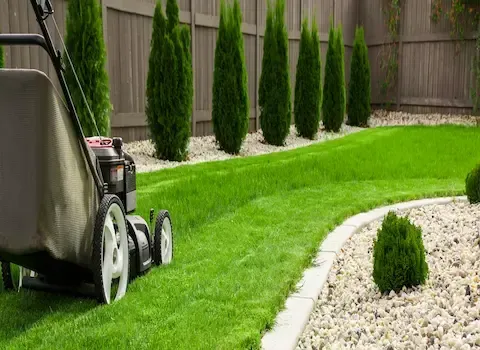
How Often To Mow Fort Wayne Lawns During Summer Heat
During Fort Wayne summers, most cool-season lawns should be mowed every 7 to 10 days rather than on a fixed weekly schedule. When heat stress slows growth in July and August, stretching intervals to 10 to 14 days protects root depth and prevents scalping. The one-third rule applies regardless of schedule: never remove more than one-third of the blade height in a single cut. Tall fescue and Kentucky bluegrass, the dominant grasses in Allen County yards, enter a semi-dormant state during prolonged heat, and aggressive mowing during that period causes more harm than good.
How Does Summer Heat Change Mowing Frequency in Fort Wayne?
Fort Wayne summers regularly push daytime highs above 85°F from late June through August, and that sustained heat dramatically slows cool-season grass growth. What was a lawn growing an inch per week in May may barely produce half that by mid-July. Mowing on a rigid every-seven-days calendar during this slowdown strips turf that hasn't grown enough to justify cutting. Longer blades shade the soil, reduce moisture evaporation, and insulate root zones against the heat radiating off Fort Wayne's clay-heavy soils. Adjusting your interval based on actual growth—not the calendar—is the most important shift you can make heading into summer.
What Is the One-Third Rule and Why Does It Matter More in Summer?
The one-third rule states that you should never cut more than one-third of the grass blade in a single mowing session. During cooler months this is a best practice. During summer heat it becomes critical. Removing more than one-third of the blade at once stresses the plant's ability to photosynthesize, forces it to draw on carbohydrate reserves stored in the roots, and leaves the soil exposed to direct sun. For tall fescue lawns maintained at 3.5 to 4 inches—which is the recommended summer height for Fort Wayne's climate—that means triggering a mow when grass reaches roughly 5.5 to 6 inches, not before. If you've let the lawn get too long during a heat stretch, raise the deck and make two passes several days apart rather than scalping in one session.
How Do You Spot Drought Stress Before It Ruins a Mowing Cycle?
Drought stress shows up visually before the grass actually dies. Watch for these early indicators in your Fort Wayne yard:
- Footprint persistence: If your footprints stay visible in the lawn for more than a few minutes, the turf lacks the turgor pressure to spring back—a clear sign it's stressed.
- Bluish-gray tint: Healthy green grass shifting toward a dull blue-gray means the blades are rolling or folding to conserve moisture.
- Slowed growth plateau: When you mow and the lawn looks the same height a week later, growth has effectively stalled.
When you see these signs, delay mowing entirely if possible. A stressed lawn getting cut loses what little moisture protection it has. If you must mow, raise the deck height by half an inch above your normal setting, mow in the early morning when temperatures are lower, and make sure blades are sharp to minimize tissue damage.
Should You Mow Differently in Different Parts of Fort Wayne?
Microclimates across Allen County create meaningful variation in how lawns behave in summer heat. Yards in the southwest quadrant of the city near the Maplecrest corridor tend to have heavier clay concentration, which retains moisture longer but also compacts more readily under mowing equipment. Neighborhoods closer to the St. Marys and Maumee river corridors often have slightly better-drained loam and may see slightly faster summer recovery. Shaded lawns in older districts like Lakeside Park or South Wayne hold moisture longer and may need mowing closer to the 7-day end of the range even in July. Sun-baked front lawns facing south or west will show stress fastest and need the most conservative mowing intervals. Knowing your specific yard's behavior from one summer to the next is the most reliable guide.
What Mowing Mistakes Cause the Most Summer Lawn Damage?
The most common errors Fort Wayne homeowners make during summer mowing aren't about the mower—they're about timing and habits:
- Mowing midday: Cutting during peak heat, typically between 11 a.m. and 3 p.m., stresses already heat-loaded turf and increases moisture loss at the cut points.
- Bagging clippings: Grass clippings left on the lawn return nitrogen to the soil and act as a thin mulch layer. Removing them during summer strips a free moisture-retention benefit.
- Keeping the same spring schedule: A lawn that needed mowing every six days in April doesn't need that frequency in July. Failure to adjust is one of the leading causes of summer thinning.
- Dull blades: Dull mower blades tear rather than cut grass, leaving ragged brown tips that increase disease vulnerability during hot, humid Fort Wayne summers.
For professional-grade results adjusted to Allen County conditions, Lawn Mowing services from Fort Wayne Lawn & Snow are calibrated to seasonal growth patterns rather than arbitrary weekly visits.
How Does Summer Mowing Connect to Overall Turf Height Management?
Summer mowing frequency doesn't exist in isolation—it connects directly to how you've set your mowing heights throughout the season. Raising deck height progressively from late May through June prepares the turf canopy to handle heat before it arrives. Lawns that enter summer already at 3.5 to 4 inches have a structural advantage over those that were cut short through spring. For a deeper look at how Fort Wayne's soil conditions affect height decisions across the season, the clay soil mowing height notes provide context specific to Allen County turf management.
When Should You Resume a Normal Mowing Schedule After a Heat Stretch?
Cool-season grasses in Fort Wayne typically resume active growth when nighttime temperatures drop back below 70°F consistently, usually in late August or early September. Watch for visible new growth and the return of the lawn's green color intensity. Once growth resumes, you can tighten your interval back toward 7 days, but continue monitoring the one-third rule as the lawn recovers. Avoid the temptation to immediately drop deck height at first fall temperatures—let the turf rebuild density for two to three weeks before gradually stepping the height down toward your fall target.